

Home Blog Page 118

Essay Length – How Long Should It Be? The Lowdown

Essay Length

Genre determines how long an essay is. It’s common for students to wonder how many pages they should write to satisfy their professor. Thus, the author has to be aware that the study’s focus and the nature of the class dictate almost everything. In most cases, the lecturer will give you specific guidelines and a word limit to follow. However, if this is not the case, you must base your decision on the circumstances. 

In terms of length, essays are often shorter than other types of academic writings like dissertation and research papers. However, if you are unsure about the total number of pages, you can read this article to find out.

Which Sections of the Essay Should Be How Long?

Paragraphs in an essay should be of around the same length as the essay itself. There’s no need to do anything fancy; just split the essay into sections (except for the introductory and concluding paragraphs). 

Attending school in Townsville will provide English lessons including that it is inappropriate to write a lengthy paragraph of eight phrases followed by a brief paragraph of three. A consistent level of equilibrium must be preserved throughout the text.

Before beginning to write, it is recommended that you consider how long each paragraph should be. Construct a plan, outlining the points to be covered in each paragraph and the number of words allotted to that section. ‍

Writing a High School Essay

One to five pages is enough for the high school level. Typically, the essay should consist of 5 paragraphs and follow the standard essay model. So, you will need to write an introduction with a thesis, a main body (3 sections), and a conclusion. 

For the high school level, the quality means much more than the quantity. But you should not forget that the professor will expect the basic length of the essay. As a side note, if you are wondering how to write a research problem, look no further than this article.

Writing a College Essay

When writing an essay for college, three pages is usually plenty to cover the subject. So, allow for around three pages total, including an introduction, body, and conclusion. Aim for no more than seven pages, with five being ideal for a wide subject. There is a risk that a college essay that is more than five pages long will be misunderstood as a research project. ‍This entry was posted on August 1, 2010.

Writing a Graduate Essay

When you get to this point, the length of your essay is likely to have increased to at least five pages (from the initial average of 1500 words). A variety of factors, including topic, school, discipline, and course level, determine how long a written assignment should be. Most universities provide a dedicated course where students may learn all the fundamentals of good writing. Professors often provide guidance on how to avoid going over or under the required word count, so this is not an issue.

Writing an Undergraduate Essay

The essay required of graduate students is remarkably comparable to that of undergraduates. Likewise, everything is based on the demands of the course and the institution. The number of pages an essay needs might also be affected by the subject matter. Each module in a university course will likely include many writing tasks. Keep in mind that the required word limit might vary anywhere from 2,000 to 6,000 words if you are unsure of how lengthy an essay should be for this level.‍ 

The Expected Essay Length: How Should It Be Met?

Keep in mind that, depending on the student’s academic standing, the professor will need an essay of a certain length. Even if you aren’t sure how many words an essay should be for a certain class, it’s still a good idea to stick to the guidelines.

If the student submits an essay that is much shorter than what was requested, the instructor may conclude that the student didn’t make a sufficient effort. In fact, if the essay has a large word count, the student may have included unnecessary material without doing thorough analysis or using wordy structures.

Conclusion

You should now have a good idea of the professor’s minimum and maximum expectations for your essay. Importantly, make sure your essay has proper organisation and that you meet the minimum word count (introduction, main body, and conclusion). Separate the text into paragraphs and try to keep a certain equilibrium between them. Bear in mind that the introductory and concluding sections of any essay are often shorter than the body.
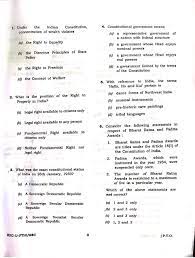

Are current affairs questions asked in the UPSC question paper?

UPSC question paper

Current affairs have a strong foothold in the UPSC exams. In fact, the current affairs section is included in both prelims and mains; therefore, it is essential for you to study this subject thoroughly if you want to fetch good scores.

Also, it has been observed that the current affair questions have become relatively tough, so you will have to buck up and fasten your preparation. But, the good news is that it can become effortless for you if you opt for the BYJU’s Exam Prep, as they provide you with all the data and previous years’ question papers to make the studies seamless for the student

How to prepare for current affairs for UPSC?

The above table proves that current affairs questions are asked in the UPSC exam. So, how can you make your preparations better? Here are some of the easy ways for you. You can also check out the UPSC question paper to get to know the weightage of questions being asked in the exam so that you can prepare accordingly.

  • Focus on issues, not on the news.
  • Take notes as soon as you read any news.
  • Concentrate on keywords.
  • Opt for quality above quantity.
  • Do not mug up; instead, understand the cause.
  • Revisions are a must.
  • Keep in mind that you must do answer-writing practice.

UPSC IAS Prelims Exam Pattern

Subject Total no. of Questions Marks Duration
Paper I: General Studies 100 200 2 Hours
Paper II: General Studies (CSAT) 80 200 2 Hours


The major topics you should cover for Paper I are-

  • Geography
  • History
  • Economy
  • General Science
  • Polity
  • Environmental
  • Current Events

The major topics you should cover for Paper II are-

  • Numerical ability
  • Mental ability
  • Excellent hold over the English language.

Importance of Current Affairs in the UPSC exams

The candidate needs to devote a lot of time in studying current affairs because around 15 to 20 questions in the Prelims are on current affairs. In fact, 60 to 70 percent of the questions asked are associated with current affairs in some or the other way.

Make your preparations painless by downloading BYJU’s Exam Prep, as here; you can get the complete syllabus and guidance on UPSC exam preparation. Experts in every subject will help you cover the syllabus and assist you in making a prep schedule so that you can complete the course in time, do the revisions and take mock tests as well. Sign up today!

Stay Connected with Education Blogs & Write for us Education.


How to Become a Successful Music Producer – Tips From the Best in the Business

Whether you are beginning out in the music production industry or have been working for many years, there is no end to learning how to become better at your work to accelerate your career progression. The music industry is one of the most quickly evolving sectors due to the transformational change in technology that is at the heart of all modern electronic music production. If you want to achieve success as a music producer, you need to acquire several skills, be ready to learn new techniques, and constantly innovate.

Some vital tips for becoming a successful music producer:

Be Ready To Take the Lead

Music production has many dimensions, and managing all of them for a successful outcome can be difficult. As a music producer desiring to accelerate his career, you need to be familiar with all aspects of music production and be able to prioritize tasks. For example, if you are going to record musical instruments live, you need to ensure that all the equipment is in fine condition. You will be expected to lead from the front advising the artists on improving the quality and presentation of the track. All music production courses in Mumbai emphasize at the end of the day, you need to remember it is your vision of the music that guides the quality of the final product.

Learn From Your Mistakes

It is natural for you to make mistakes as you handle music production. The process is so technical that you are very likely you will make mistakes that affect the quality and presentation of the music. You will also encounter technical glitches that you will need to set right or devise workarounds. While you will recognize many mistakes immediately, some will manifest themselves after you have completed the job. Even though you might not be able to set them right at the editing and mastering stage, you can learn from them and ensure they do not recur. Every music production project is a great learning experience, and you need to have an open mind to learn how to get on top of them.

Be Receptive to Feedback

When working on music production, you need to be receptive to feedback since you need to grow, advises a faculty at BeatPro, a leading music production training institute. Ask the people you trust to give you honest feedback to help you to improve. While people with technical knowledge can identify where you have gone wrong and where there is potential for improvement, even music lovers can tell you how they feel when they listen to a track and what they would have loved you to do to improve it. You should aim to build personal relationships with music production professionals who will give you honest feedback that will help you to improve.

Conclusion 

The best way of improving your music production skills to take your career to a higher orbit is to keep examining your motivation. The only way you can be a successful music producer is to have a high level of motivation, confidence in your abilities, and willingness to learn. You should also be professional in your attitude.

8 Common Types of Visual Communications to Include in Your Virtual Event

8 Common Types of Visual Communications to Include in Your Virtual Event

It is essential and helpful to include various types of visual communications in a virtual event. Moreover, you can get numerous ways to add these with the best virtual fair platform. So, all you need is the knowledge to prepare and include these visuals in your event.

Hence, 8 Types of visual communications that you can include in your virtual fair explained are as follows:

  1. Infographics

It is essential that you know and uses various types of visual communication. So, it can be helpful for better business promotion and branding at the virtual fair platform. Moreover, you can use infographics. You can create several infographics in just 5 simple steps.

Step 1: Start by outlining all the aims you are targeting with creating your infographic. Moreover, use a proper structure, highlight the key factors, use Gantt charts and jot down all the risk factors using a breakdown structure. It will make your project schedule easy.

Step 2: Now, collect as much data as possible for your infographic. Moreover, you need to share complete information about the event date, time, and agenda.

Step 3: You can make the data visualizations for your infographic with the ICCORE method. Moreover, it stands as inform, compare, change, organize, reveal relationships, or explore.

Step 4: Use an infographic template to create your layout perfect and more appealing. Moreover, follow the proper flow and grid layout for your infographic.

Step 5: You need to pick the best fonts and use repetition, consistency, and alignment. It will help to add style to your infographic design. Moreover, it will be helpful to make it stand out on a virtual job fair platform.

  1. Process Diagrams

You can communicate easily with a process diagram. It can be helpful to display a proper procedure from start to end in a good flow. Moreover, you can showcase various types of process charts on the virtual trade fair platform. For instance, you can use flowcharts, mind maps, process infographics, workflow diagrams, customer journey maps, case diagrams, etc. So, with a proper combination of colours and content, you can create the best process diagram. It can make better visual communication and promotion of your virtual fair.

  1. Flow Charts

You can use a flowchart to display a step-by-step process clearly for the attendees at your virtual exhibition platform. Hence, here are some tips for you.

  • You can use consistent design elements, like shapes, lines, and texts, in order to create a better flow chart.
  • Do not fill your flow chart with a lot of content or design. Moreover, try keeping everything on one page with attractiveness.
  • You can try creative ways to display the flow on your chart. But it is always best to keep the data flow from left to right.
  • Trying a split path will be easy to understand and proper flow of content. So, you can prefer the split path on a traditional decision symbol.
  • You can use the return lines to display the return flow if there are any. Place these lines under the flow diagram.
  • Roadmaps

You can display business initiatives with the end goal, steps to take, and milestones to reach along the way in a roadmap. Also, you can create and showcase the roadmap for all the products available at your virtual fair platform. 7 Tips for roadmaps are as follows:

  • Keep your focus on the goals and outcomes
  • Execute the necessary prep work
  • Use a coherent story
  • Keep it short and simple
  • Fortified and strong acceptance
  • Show data wherever required
  • Keep the roadmap measurable

Additionally, you have to display the long & short-term objectives, tasks, milestones, and dependencies. Also, as the resources required & their allocation strategy, a timeline of the project’s life cycle, and risk factors & challenges.

  1. Charts and Graphs

Charts and graphs are the best way to create and maintain visual communication with your audience. You can also use these elements for better branding at your virtual job fair platform. So, 7 Tips for using the graphs and charts are as follows:

  • Highlight key data points
  • Simplify your slides
  • Always make your pie charts easy to understand
  • Use PowerPoint 2010 to create better-looking graphs
  • Avoid embedding sensitive data
  • Convey data in other ways
  • Use different props to convey data
  1. Visual Reports

When you add some visuals to your reports, it becomes a visual report. So, it can be anything from images to website links, videos links, gifs links, and other links. Moreover, you can create such visual reports. Also, you can provide them to the attendees via the virtual fair platform.

  • Make the information easy to digest with a proper balance between the text and visuals.
  • Draw the audience’s attention to key points with a single highlight color.
  • Make your report easy to navigate by creating and providing a clear text hierarchy.
  • Use charts, like bar, line, bubble, and pie charts.
  • Make a cohesive report design by including your branding for visualization
  • Increase the optimal readability with a 2-column layout
  • Use detailed tables and graphs in your appendix
  1. Presentations

The best virtual exhibition platform always provides the document presenter for the speaker. So, it can be helpful to share and display all the presentations prepared by the experts for the session. They can use it during the virtual fair for better discussion. Considering these tips, check out a few slideshow maker tool available online that would make your presentation attract more audience..

  • Less text and more visuals
  • Use one core message
  • Avoid information that doesn’t support the core message
  • Maintain your focus using a strong presentation outline
  • Reinforce with text and avoid repetition
  • Keep a key takeaway per slide
  • Highlight the key message on each slide with proper visuals
  • Orient and engage your audience using the scaffolding slides
  • The emphasis on the text size, weight, and color
  • Avoid distraction with a consistent design choices application
  • Use topics to split the group presentations
  • Keep your audience’s interest by providing a variety of page layouts
  • Get started using the presentation templates
  • Share inspiring people as an example in your presentations
  • Add poignant questions to the dedicated slides in your presentation
  • Inspire your audience with various quotes
  • Use text and images to emphasize the key points
  1. Mind Maps

You can organize information in a hierarchy and show relationships among pieces of the whole using mind maps. Moreover, the best virtual fair platform supports such documents in their library. Also, it will be accessible to view and download for audiences. Hence, here are some basics of mind maps you may find helpful in creating one.

  • Central theme
  • Associations
  • Curved lines
  • Keywords
  • Proximity
  • 7 Associations
  • Color & images

So, these are the various common types of visual communications that you may find helpful to include in your virtual fairs.

Also, read Anxiety Counselling Services In Singapore

The Best Areas To Improve Construction Company Workflows

Construction Company workflows are the backbone of any good construction business. Construction companies that can optimize their workflows can save time and money, which gives them a competitive edge in the industry. In this blog post, we will discuss seven different areas where construction companies can improve their workflows and become more efficient with idtop reviews.

Time management is one of the most important aspects of running a construction company. Construction companies often have to deal with tight deadlines, so it is crucial that they are able to manage their time efficiently. One way to improve time management in a construction company is to create a detailed schedule for each project. This schedule should include every task that needs to be completed, as well as the estimated time for each task. Construction companies should also create a system for tracking progress on each project. This will help them stay on track and ensure that each project is completed on time.

Another area where construction companies can improve their workflows is in communication. Construction projects are often complex, with many different people working on different tasks. It is important that construction companies have a system in place for communicating between all of the different team members. This communication should be clear and concise, so that everyone is on the same page. Construction companies can use project management software to help with communication between team members.

Improving your construction company’s workflow will have a positive impact on the success of projects, increasing profit margins. There are many ways that you can do this and we’ll go over some of them in our article today.

In order to stay competitive with other companies in their industry it is essential for businesses like yours look at improving all aspects within operations from planning out tasks ahead so they’re completed efficiently without any confusion or wasted time; managing paperwork properly by keeping up-to date versions throughout every step during each job phase (or stage); utilizing communication tools such as chat programs/texts which allow employees immediate access when needed and more.

Construction companies can also improve their workflows by streamlining their processes. Construction projects often involve a lot of paperwork, so it is important that construction companies have a system in place for managing this paperwork. Construction companies can use electronic document management systems to help with this. These systems can help construction companies keep track of all of the different documents that are involved in a project.

Construction companies can also improve their workflows by investing in new technology. Construction is an industry that is constantly changing, and new technologies can help construction companies stay ahead of the curve. Ground Penetrating Radar (GPR) has been used in construction projects for many years, but its potential to improve project efficiency is often underestimated. GPR (Ground Penetrating Radar) sensors can be used for a variety of tasks such as identifying underground utilities, locating rebar in concrete, and detecting voids beneath slabs. Construction companies should research new technologies that can help them improve their workflows. One example of a new technology that is being used in construction is drones. Drones can be used for tasks such as surveying and inspecting construction sites. Construction companies that invest in new technologies can give themselves a competitive edge in the industry.

In conclusion, there are many different areas where construction companies can improve their workflows. Construction companies that take the time to optimize their workflows can save time and money, which gives them a competitive edge in the industry.

Do you have any tips for improving construction company workflows? Share them in the comments below!