
Home Blog Page 41

5 Ways to Manage Financial Stress During Difficult Times

5 Ways to Manage Financial Stress During Difficult Times

Financial stress is a persistent worry due to the instability that comes with so much uncertainty, especially when your income may be at risk or you suddenly face extra costs related to events like job loss or illness. Despite this, there are ways in which you can manage financial stress during difficult times without experiencing long-term hardship. Here are some practical steps you can take to reduce money worries and protect your investments for the future. 

1. Get a Loan

Applying for a loan is one of the most common ways to reduce financial stress during difficult times. Loans can provide much-needed liquidity and allow you to cover unexpected expenses easily. When applying for a loan, compare rates and terms before choosing the best option for your needs.

If you need a short-term option, payday loans are another way to bridge the gap between paychecks. For instance, My Canada Payday is a great online resource if you need a loan quickly. You can apply online and get cash within minutes. The key to taking out a loan is ensuring you can pay it back comfortably without compromising your other financial obligations.

2. Create a Budget

Creating a budget is the best way to keep track of your spending and ensure you spend appropriately during difficult times. Start by listing your income sources and tracking each expense using an app like Mint or YNAB (You Need A Budget). This will help you stay on top of your bills and make sure you’re setting aside money for the future.

You should also consider creating a separate emergency fund that can be used to pay unexpected costs, such as medical bills or home repairs. Start by saving a few dollars each month, then gradually increase the amount until you have enough saved to cover any potential emergencies.

3. Make Smart Investment Decisions

Making smart investment decisions is essential to protecting your money during difficult times. If you need help investing, consider seeking professional advice from a financial advisor who can help you make wise choices for your future.

You should also try to diversify your investments, as this will provide extra protection against market volatility. Consider investing in stocks, bonds, real estate, and other assets to help spread the risk of any losses. The key to smart investing is ensuring you understand each option’s risks and rewards before committing.

4. Cut Unnecessary Expenses

When facing financial stress, it’s important to look at your expenses and cut out anything that is not essential. This could include gym memberships or streaming services that are no longer needed. It’s also worth considering ways to reduce your bills, such as switching to an energy-efficient provider or signing up for a no-contract phone plan. You should also look at your subscriptions and memberships and cancel any you’re no longer using.

5. Negotiate Payment Plans

If you’re struggling to make payments on bills or credit cards, it’s worth considering negotiating payment plans with your creditors. Companies are willing to work with customers during difficult times and may be able to provide more flexible terms.

You can also check whether interest rates can be reduced or deferred payments can be requested. This will help you manage your debt more effectively and reduce payment stress. The key to successfully negotiating payment plans is to be honest, and realistic about your financial situation. This will help ensure that the creditor sees you as a reliable customer and is more likely to work with you.

Managing financial stress during difficult times can be simple and manageable. By following the steps outlined above, you can ensure that you’re making the best decisions for your financial future. Remember to always put your long-term financial goals first, and don’t hesitate to ask for help.


Know What Senior Home Care Services Include For Alzheimer’s Patients

senior home care

Alzheimer’s is a disease that has a severe effect on the brain which makes them less able to manage the easiest household tasks. Alzheimer’s patients are also prone to wander and get lost which makes it risky to leave them alone at home. We have prepared a guide for you to understand the disease better and how senior home care can help in this case. 

A devastating diagnosis: Alzheimer’s disease

Alzheimer’s disease is one of the few conditions that can completely upset a family. More than 5.5 million people in america alone are thought to be affected by this chronic disease, which is the sixth biggest cause of mortality in the United States. Alzheimer’s disease make ourour loved ones lose their memory over time, leaving them unable to do even the most basic daily chores. At first, you may only notice minor symptoms that have a minor influence on your daily life like

  • long-term or Short-term memory loss
  • Confuses the names and identities of people
  • Difficulty solving easy problems
  • Losing belongings or frequently becoming lost
  • Struggles day-to-day activities
  • confusion about current place or time
  • Acts more irritable,irrationally, or stressed than usual
  • Forgets words or begins mixing up words

These will become more severe. With proper care, you can delay the disease to reaching its final stage. Well, caring for Alzheimer’s patients requires a lot of time and effort which can be a stress for your family both financially and emotionally. Alzheimers patients face unique dangers and risks, which cannot be eliminated without senior home caregivers who are well trained for every consequence. Eventually, every patient will need a senior care Brooklyn service to ensure their well-being and safety. 

Home care facility for Alzheimer patients

Nursing homes or assisted living are the only options for better treatment of Alzheimer’s patients. However, uprooting your loved one from a valued and familiar environment will be difficult, and neither it will give the degree of personalized care you seek. That is not the case with personal senior home care in Vancouver. Here is how personal home care is the best option. 

Personal attention

Your loved one will most likely have to compete with other pateins to adjust with the staff’s limited attention, in limited time in a nursing home.

While assisted living allows individuals to have greater independence, these facilities are frequently unable to care for clients who have mobility issues. When your loved one’s health deteriorates to a certain extent, they’ll need to be transferred to a nursing facility.

Affordable option

Live-in care allows your loved one to remain in their own home, in a familiar and comfortable atmosphere. The only thing that will change is that you will get to know the caregiver better. They might even become best buddies if they find the appropriate fit! In most cases, home care is economical, and it can be used in conjunction with other medical providers at any stage of disease progression or at the end of life.

Senior home care is the ultimate solution for Alzheimer’s care. Senior care comes with a goal to provide patients with independence and families with peace of mind.

How Supplemental Benefits Can Boost Employee Engagement and Build a Stronger Workplace Culture

How Supplemental Benefits Can Boost Employee Engagement and Build a Stronger Workplace Culture

Supplemental benefits are quickly becoming an integral part of a number of workplaces. They are a way for employers to provide additional support to the healthcare, retirement, or insurance initiatives of their employees. Therefore, any company, regardless of size, would find it advantageous to implement such strategies within the organization to encourage the application of new talent, engagement of existing employees, and retention rates across teams. 

What Are Supplemental Benefits?

This offering covers a range of additional attributes to an existing healthcare scheme or similar. The most common is the OTC supplemental benefits, which are offered to support health insurance and provide essential, basic medicinal care for every employee. They are all essentially designed to protect and enhance the general quality of life. 

Examples

Here are some prime examples of the variety of supplemental benefits an employer is able to offer: 

Why Engagement is Important in the Workplace

All of this adds up to a higher level of engagement, but why is that even important? Well, engagement represents so many valuable things for the work environment. It makes people stay, it keeps people motivated within their professional role, and it boosts productivity while also boosting retention rates. It feels like a simple formula. 

How Do Supplemental Benefits Improve Workplace Culture?

Three key areas support the fact that supplemental benefits improve workplace culture. This is always an important part of any company because it is what represents them to external candidates and consumers. These relationships and network connections are what drive a business forward as opposed to holding it back. 

By Making People Want to Stay: Positive Retention

Positive retention rates are at the heart of every company’s success. Employees that stay are employees that develop and make a company better. High turnover rates are actually detrimental to the overall output and efficiency of an operation, and every organization should aim to action this wherever it is a problem.  

Supporting Better Health For Employees: Sick Day Reduction

A reduction in sick days will be another natural perk of ensuring the medical needs of employees are looked after sufficiently. With access to basic medical care as a part of the workplace benefits scheme, employees are more likely to engage with physical health and be, generally, healthier.

Attracting New Talent: Boosting Reputation

Of course, no company can ever grow if it does not acquire new members for its team from time to time. Naturally, fewer people with the right skills and accreditations will come forward for new roles if the employer has a poor reputation around how it treats its employees. So, providing supplemental benefits and all the positive consequences that entails will bolster a positive reputation that looks great in the eyes of new additions to the organization.  

Supplemental benefits definitely exist to boost employee engagement. A natural byproduct of this is that a stronger workplace culture is born. Any way that a company can nurture a positive culture within its walls will be a welcome strategy. This all strings together a positive, vibrant, and inviting culture for the workforce.

What is Fiber Internet, and How Has it Benefited Businesses?

What is Fiber Internet, and How Has it Benefited Businesses?

Access to data and the internet is more important than ever. With the growing need for sending and receiving vast amounts of data, we need connections that can keep up. Fiber optic cables fill this need perfectly as they allow for faster transfer of enormous amounts of data while being very reliable and less prone to interference and loss. Its properties and benefits make it crucial for business, and it has benefited businesses in different ways.

How Fiber Internet Works

Fiber internet uses fiber optic cables with a core, cladding, and coating. The core is the strand of glass used for the transfer of data using light pulses. The cladding provides a reflective layer that reflects the light, reducing loss and increasing the reliability of fiber optics, especially over long distances. The coating protects the cladding and the delicate core within it. The core carries pulses of light transmitting data from one point to the next, which can be transformed into a format that the endpoint can interpret as data.

Increased Internet Speeds

One of the most important ways fiber optics are transforming businesses is by enabling faster internet speeds. Fiber optics can transfer data at such high bandwidths that we now measure their bandwidth in Gigabits and Terabits per second. For businesses, the asynchronous 2 Gigabit speeds provided by Wyyerd Fiber Optics are plenty for all data and internet needs.

These faster speeds allow for better access to the internet as well as cloud services that businesses use. The faster speeds also improve communication by ensuring smoother VoIP connectivity and communication. Businesses can also host virtual conferences because they have the bandwidth to stream and upload high-definition video and audio.

Increased Data Security

The use of fiber optics has also made the transmission of sensitive business information and data much more secure. Since they transmit light pulses instead of electric ones, fiber optic cables do not suffer from electromagnetic interference meaning that the data they transmit is very difficult to intercept. Combining the added security of fiber optics cables and encrypted connections has made them the preferred choice for banking and government applications.

Lowering Costs

Fiber optics are more expensive than copper cables during installation. However, they are very cost-effective once they are in use. First, fiber-optic cables require less power to transmit data. Second, they can be configured to carry more than one data stream, meaning businesses can use a single cable for multiple connections.

Enabling Remote Work

Remote work is only possible with reliable internet connections and fast internet speeds. Fiber connections allow both and are therefore a critical part of remote work. Remote employees can work from anywhere they want if they have an internet connection. Businesses can make the resources they need available on servers or cloud computing platforms. Remote employees can also upload and down files while also being able to collaborate with their colleagues regardless of where the other party is located in the world.

Fiber optic cables and fiber connections have changed the world as we know it. They enable faster and more reliable internet connections and can keep up with today’s data demands. These benefits are also felt by businesses that have switched from outdated copper cable connections.

A Guide to Choosing the Right Freight Transportation Option for Your Business

A Guide to Choosing the Right Freight Transportation Option for Your Business

Running a business can be a lot of work. So many different components need to be considered to make it successful. One of these is your transportation. Since there are a few options to go with, each of them has pros and cons, and this piece will serve as a guide on choosing the right freight transportation option for your business. Read on to find out more, so you can make the right choice for you.

Land Freight

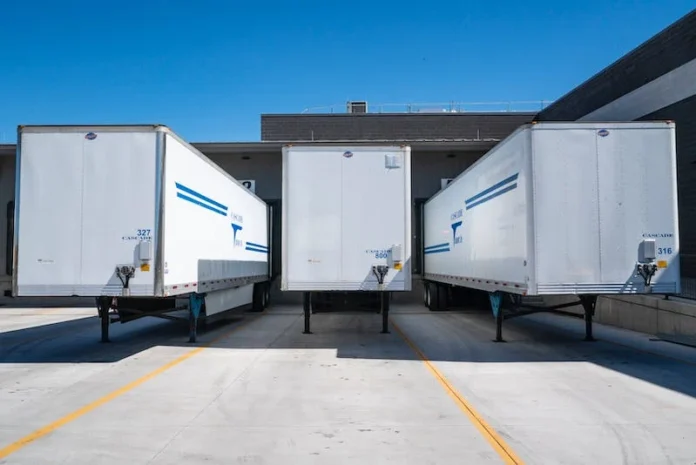
Land freight by trucks and trains is one of the oldest transport options around! This type of transport is commonly used for items that do not need to go much of a distance and come with a decent amount of pros.

There are less stringent regulations when moving cargo by land freight compared to other modes of transport, and you might also find fewer restrictions. This makes handling and documentation much simpler, which many businesses find attractive. With trucking, you will also find that the costs are significantly less than air and sea shipping options, which is another tick. Because it is common to move cargo by land, you can expect to negotiate competitive prices among different companies to get the best deal.

However, land freight does have its downsides. It can take longer for your shipment to get to its location, especially if there are borders to cross. There is also the potential for handling and transport disruptions because of a number of change of hands your cargo will see. These can cause a delay in shipments and also increase the chances of lost packages.

Air Freight

Air freight is the most recently developed mode of transport and is an excellent option for businesses that need to ship worldwide. This is the fastest means of getting your shipment to its destination, and the process also boasts strict security protocols, meaning your stuff will be much safer than other modes of transport! There are fewer steps involved with air freight, which means less likely for issues to arise. There is also next-level technology to help support the shipment, such as digitalisation in the air cargo industry.

Not only that but there is also exponential coverage with airports which means much better reach!

However, the three main things to consider with air freight is the significant cost of the service compared to alternatives, the cargo size limitations, and also commodity restrictions. These cons need to factor into your decision. 

Ocean Freight 

Taking your cargo by ocean is the most common mode of freight globally! Its advantages include bulk size and weight cargo support, significant cost saving compared to other options, and advanced handling and safety practices due to the equipment used.

That being said, if you do choose this option, you will need to make allowances for slow shipping. It can vary from a couple of days to a couple of months! It is also worth considering that ocean fright can experience uncontrollable conditions, which could delay shipment further.